
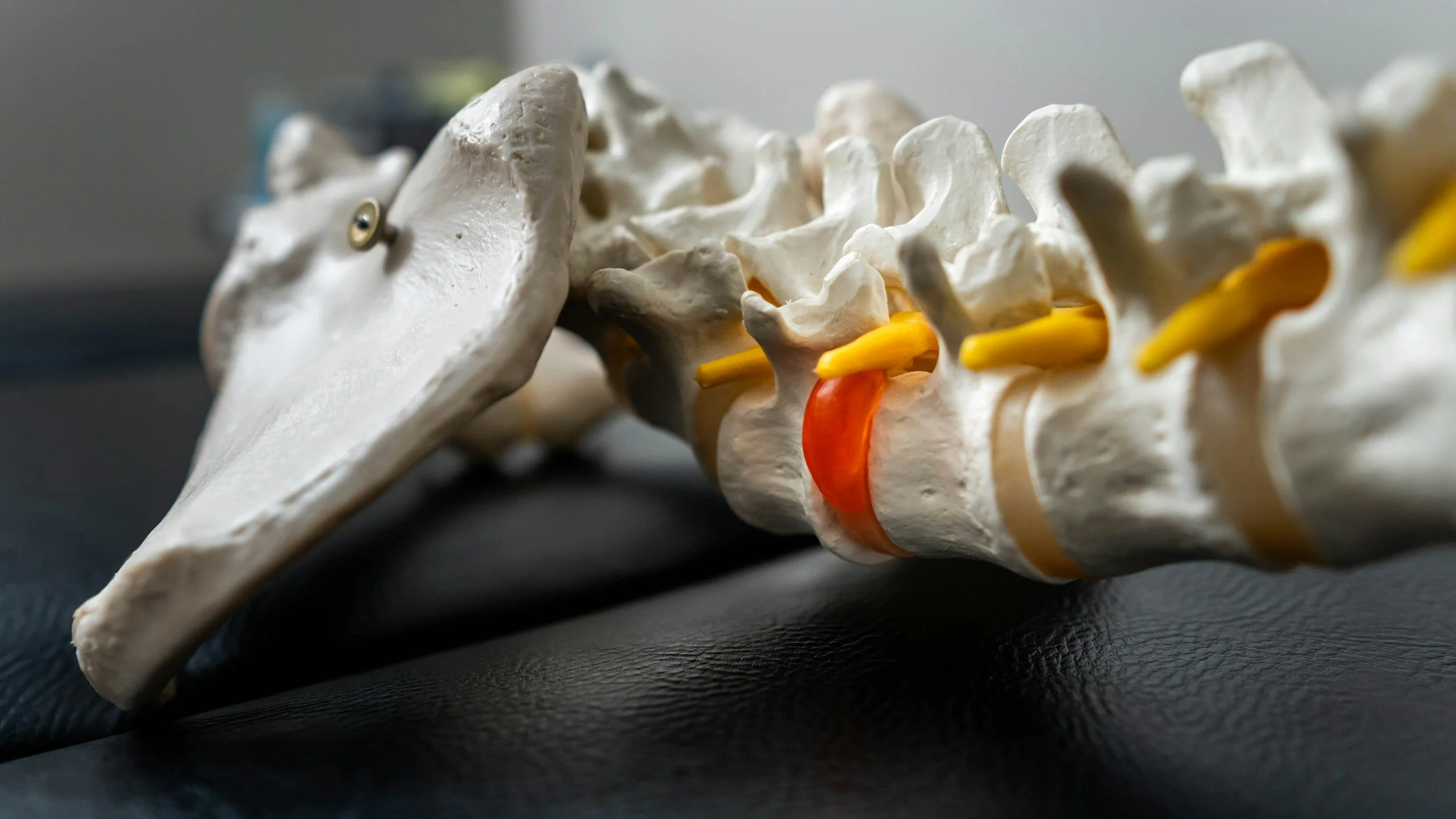
Why Does My Back Still Hurt When My MRI Looks Normal?
Chronic low back pain with a clean MRI is common. Here's what the research says about why — and what actually helps.
Dr. Pierre Zook, PT, DPT, OCS and Janae Zook, BSN, RN
Est. Read time ~3 to 4 minutes
If you've lived with low back pain for months or years, you've probably heard some version of “your scans look fine.” It's meant to be reassuring. It often lands the opposite way.
Here's the short version: your scan shows tissue. Pain isn't made of tissue alone.
A clean scan isn't the whole story
Researchers reviewed 33 imaging studies covering 3,110 people with no back pain at all (Brinjikji et al., 2015). Among those pain-free adults, 37% of 20-year-olds already showed disc degeneration. By age 80, 96% did. Disc bulges followed the same curve — 30% at 20, 84% at 80.
Findings show up in people who feel fine. And people in real pain often scan clean.
That's not a reason to distrust imaging. It's a reason not to ask it a question it can't answer. A scan is very good at showing structure. It was never designed to show how much something hurts.
When the nervous system turns up the volume
The International Association for the Study of Pain built a category for exactly this situation. In the ICD-11 classification, chronic primary pain is diagnosed when pain has persisted more than three months and is tied to real emotional distress or loss of function — and the diagnosis is “appropriate independently of identified biological or psychological contributors unless another diagnosis would better account for the presenting symptoms” (Nicholas et al., 2019).
In other words, a clean scan doesn't rule it out. It isn't a shrug. It's a category.
One process behind it is central sensitization — a change in how the spinal cord and brain process pain signals, separate from whatever started the pain. Think of it as a volume knob that got turned up and stayed there. Estimates of how common it is vary widely and lean on questionnaires rather than a definitive test, but one systematic review put the average at just under half of chronic low back pain cases (Schuttert et al., 2021).
What researchers found when they never touched anyone's back
A study published in Scientific Reports in January 2026 tested this directly (de la Coba et al.). Researchers compared 40 adults with chronic low back pain, recruited from a hospital rehabilitation service in Jaén, Spain, to 40 adults with no pain.
They never touched anyone's back. Instead they pressed on a fingernail — nine times, five seconds each, about half a minute apart, at a pressure calibrated to each person so the first press registered as mildly painful for everyone. Both groups rated that first press about the same.
Then the groups split. For the pain-free adults, the sensation faded — by the ninth press it bothered them less than the first, which is what a healthy nervous system does with a repeated, harmless signal. For the adults with chronic back pain, it climbed. Same pressure, same finger.
Nowhere near the spine. Two different responses.
It isn't a clean diagnostic test on its own — the pattern sorted the two groups correctly about two-thirds of the time, and it tracked group membership rather than symptom severity. But it was the only pain-sensitivity measure in the study that separated the groups at all; the standard pressure-pain threshold, tolerance, and temporal-summation tests all came in at roughly chance. It's also one study, 40 people per group, all between 40 and 65. What it shows is that a measurable nervous-system process can keep pain going long after tissue has healed.
What actually helps a sensitized nervous system
A nervous system that learned to amplify pain can also learn to settle back down. Usually gradually. Rarely through rest alone.
Sleep does more work here than most people expect. A review of the prospective research found that sleep problems reliably predicted new episodes and flare-ups of chronic pain — and were a stronger predictor of pain than pain was of sleep (Finan et al., 2013). A rough night can make old pain feel worse for no new reason. More on that in Sleep: The Most Underrated Factor for Injury Prevention and Recovery.
Movement is the other half. Not rest — movement, at a dose your system can handle today. A graded return to activity gives your nervous system repeated evidence that loading your back is safe. We cover the why in Movement Is Medicine: How Staying Active Helps You Heal Faster and Prevent Pain.
Where to start:
✔ Consistent sleep and wake times
✔ Movement most days, not perfect days
✔ Small increases, not big jumps
✔ Flare-ups managed, not feared
✔ A plan you can actually repeat
None of this means the pain is “in your head.” It means your body has more of a say in this than a single image can capture.
The Trek perspective
This is exactly why we don't stop at the injury. Chronic pain is rarely one thing — it's tissue, movement patterns, sleep, stress, and how your nervous system has adapted, all at once. Instead of guessing, we measure, and we build the plan around the whole picture.
If you've been told your pain “shouldn't” still be there, we'd like to help you understand why it might be — and what to do about it.
Schedule an evaluation with Trek Physical Therapy in McMinnville, OR.
Sources
Brinjikji, W. et al. “Systematic literature review of imaging features of spinal degeneration in asymptomatic populations.” American Journal of Neuroradiology, 36(4), 811–816 (2015).
Nicholas, M. et al. “The IASP classification of chronic pain for ICD-11: Chronic primary pain.” Pain, 160(1), 28–37 (2019).
Schuttert, I. et al. “The definition, assessment, and prevalence of (human assumed) central sensitisation in patients with chronic low back pain: A systematic review.” Journal of Clinical Medicine, 10(24), 5931 (2021).
de la Coba, P., Garcia-Hernandez, A., Aranda-Villalobos, P., Andrade-Ortega, J. A., & Reyes del Paso, G. A. “Assessment of central pain sensitization in chronic low back pain and its utility in diagnosis and prediction of clinical severity.” Scientific Reports, 16, 3540 (2026).
Finan, P. H., Goodin, B. R., & Smith, M. T. “The association of sleep and pain: An update and a path forward.” The Journal of Pain, 14(12), 1539–1552 (2013).

Recognized for Our Approach to Health
Est. read time: 1 minute
Janae Zook, BSN, RN
We’re honored to share that our very own Dr. Pierre Zook, PT, DPT, OCS, was recently featured in Vald Health’s Practitioner Guide to Workplace Wellness. It’s a meaningful recognition—not just of his work, but of the philosophy we live out every day at Trek Physical Therapy in McMinnville, Oregon.
Care That Looks Beyond the Injury
At Trek Physical Therapy, we don’t just treat injuries—we care for people.
Recovery is rarely about one single factor. It’s shaped by how you sleep, how you manage stress, your daily habits, your mindset, and your overall health. That’s why we strive to take the time to understand the full picture. We ask questions that go beyond symptoms because lasting results require more than a quick fix.
A Thoughtful Approach to Workplace Wellness
This same approach carries into our corporate wellness programs.
We aim to bring education and performance-based screenings that provide clear, actionable feedback—so you can better understand your health and know what to do next. It’s not about overwhelming you with information. It’s about giving you the right insights, in a way that actually leads to change.
Helping You Keep Doing What You Love
Our goal is simple:
Help you stay moving
Protect your long-term health
Support your recovery and performance
We’re passionate about helping people continue doing what they love—whether that’s at work, at home, or in sport.
We’re grateful to partner with individuals and organizations who value proactive health, and we’re proud to be part of a growing shift toward more meaningful, whole-person care.

Sleep: The Most Underrated factor for Injury Prevention and Recovery
At Trek Physical Therapy, we believe movement is medicine.
One of the most powerful — and most overlooked — recovery tools is sleep.
Whether you’re a high school athlete in season, a weekend warrior training for your next event, or recovering from surgery, sleep plays a direct role in how well your body heals and how likely you are to get injured in the first place.
Let’s talk about why.
Sleep and Injury Risk: What the Research Shows
If you consistently sleep less than 7–8 hours per night, your injury risk goes up.
A well-known study of adolescent athletes found that those sleeping less than 8 hours per night were 1.7 times more likely to sustain an injury compared to those who slept 8 or more hours.
Milewski et al., 2014, Journal of Pediatric Orthopaedics
That’s a significant difference — and it doesn’t just apply to elite athletes. It applies to active adults, recreational runners, and anyone training regularly.
A review in Current Sports Medicine Reports also concluded that short sleep duration and poor sleep quality are consistently associated with increased injury risk.
Huang & Ihm, 2021
Why?
Because sleep affects:
Reaction time
Coordination
Balance
Muscle recovery
Fatigue levels
When sleep decreases, fatigue increases.
When fatigue increases, movement quality declines.
And when movement quality declines, injury risk rises.
Sleep Is When Healing Actually Happens
During deep sleep, your body shifts into repair mode.
Growth hormone is released.
Muscle protein synthesis increases.
Inflammation is regulated.
Tissue repair accelerates.
If you’re recovering from:
ACL reconstruction
Rotator cuff repair
Joint replacement
Muscle strain
Tendon injury
Your body is actively rebuilding tissue. That rebuilding largely happens at night.
If sleep is short or disrupted, that repair process becomes less efficient.
In simple terms:
You can’t out-rehab poor sleep.
Sleep and Pain: A Two-Way Relationship
Sleep also affects how much pain you feel.
When sleep is restricted, pain sensitivity increases. That means injuries can feel worse after a poor night of sleep.
Many patients notice this without realizing why:
“I didn’t do anything different, but my shoulder hurts more today.”
Your sleep quality could be contributing.
Improving sleep quality can reduce pain perception and improve rehab tolerance.
How Much Sleep Do You Need?
General recommendations:
Teen athletes: 8–10 hours per night
Adults: 7–9 hours per night
Consistently sleeping less than 7 hours increases both injury risk and slows recovery.
One late night won’t derail you.
Chronic short sleep might.
Signs Sleep May Be Affecting Your Recovery
You might need to prioritize sleep if you notice:
Slower progress in physical therapy
Persistent soreness
Recurrent minor injuries
Increased pain after poor sleep
Ongoing fatigue despite smart training
These aren’t just training problems. Sometimes they’re recovery problems.
Practical Ways to Improve Sleep
At Trek, we’re big believers in simple, sustainable habits.
Start here:
✔ Go to bed and wake up at consistent times
✔ Limit screens 30–60 minutes before bed
✔ Keep your room cool and dark
✔ Eliminate caffeine after early afternoon
✔ Create a wind-down routine
You don’t need perfect sleep.
You need consistent sleep.
The Trek Perspective
We care about what happens outside the clinic just as much as what happens inside it.
You can work hard in rehab.
You can train with intention.
You can move well.
But if sleep is neglected, progress can slow down.
If you’re navigating an injury, preparing for a season, or recovering from surgery, we’re here to help you build a plan that supports your whole recovery — not just your exercises.
Sources
Milewski MD et al. Chronic Lack of Sleep is Associated With Increased Sports Injuries in Adolescent Athletes. Journal of Pediatric Orthopaedics. 2014.
Huang K, Ihm J. Sleep and Injury Risk. Current Sports Medicine Reports. 2021.

Movement Is Medicine: How Staying Active Helps You Heal Faster and Prevent Pain
Est. read time: 5-6 minutes
By Trek Physical Therapy – McMinnville, OR
You’ve probably heard the phrase “movement is medicine.”
At Trek Physical Therapy, we see this proven every day.
While rest has its place after an injury or during severe pain, long-term healing and resilience come from the right kind of movement. Research consistently shows that appropriate physical activity can reduce pain, speed up recovery, improve mental health, and prevent future injuries.
In other words: movement isn’t just something you return to after rehab — it’s a key part of the treatment itself.
Why Our Bodies Are Designed to Move
The human body thrives on motion. When we move regularly:
Muscles become stronger and more efficient
Joints receive nutrients through circulation
Tendons and ligaments adapt and become more resilient
The nervous system becomes better at controlling movement
Inflammation is regulated
Blood flow improves
When movement is removed for long periods, the opposite happens:
Muscles weaken
Joints stiffen
Coordination declines
Pain sensitivity often increases
Injury risk rises
This is why prolonged sitting, repetitive work, or avoiding activity after pain starts can unintentionally make symptoms worse over time.
Is Movement Safe When You’re in Pain?
This is one of the most common concerns we hear.
The short answer: yes — when guided correctly.
Pain does not always mean damage. Many people have strong, healthy spines or joints that are simply sensitive due to stress, deconditioning, or past injuries.
A Doctor of Physical Therapy helps determine:
What movements are safe
Which tissues need strengthening
What should be avoided temporarily
How to progress without flare‑ups
Instead of guessing or pushing through pain, you get a plan built specifically for your body.
How Physical Therapy Turns Movement into Medicine
At Trek Physical Therapy, movement is the foundation of our care — but it’s never random or generic.
1. Data‑Driven Assessments with VALD Health
We use VALD Health technology to objectively measure strength, asymmetries, and movement capacity.
This allows us to:
Identify weak links that may contribute to pain
Catch imbalances before they become injuries
Track progress over time
Customize exercise programs with precision
You don’t just “feel” better — we can measure how your body is improving.
2. Personalized Strength & Mobility Programs
Your plan may include:
Core and hip strengthening
Joint mobility work
Balance and coordination training
Gradual return‑to‑sport or return‑to‑work progressions
Education on daily movement habits
Everything is designed to support healing while building long‑term durability.
3. Whole‑Body Health Support
We also offer InBody body composition scans, which help patients understand muscle mass, body fat percentage, and overall health markers.
This is especially helpful for:
Patients returning to exercise after injury
Weight‑management goals
Athletes tracking performance
Anyone wanting objective feedback on their health progress
Movement works best when it’s paired with good recovery, nutrition, and lifestyle habits.
Conditions Where Movement Helps Most
Physical therapy–guided movement is highly effective for:
Low back pain
Neck pain
Shoulder and knee injuries
Arthritis
Sports injuries
Post‑surgical rehab
Tendon pain
Balance issues
Chronic pain
Avoiding movement often leads to stiffness and fear. The right movement builds confidence.
Simple Ways to Add More Healthy Movement Today
You don’t need a full gym routine to start benefiting:
Walk 10–20 minutes daily
Stand up every 30–60 minutes at work
Do gentle mobility exercises in the morning
Strength train 2–3x per week
Stretch tight areas consistently
And if you’re unsure where to start, that’s exactly what we’re here for.
Why Patients Trust Trek Physical Therapy
At Trek, we combine:
One‑on‑one care
Evidence‑based treatment
Advanced technology
Clear progress tracking
A supportive local clinic environment
Our goal isn’t just to get you out of pain — it’s to help you move better for years to come.
Ready to Use Movement as Your Medicine?
If pain, stiffness, or injury is holding you back, you don’t have to navigate it alone.
Schedule an evaluation with Trek Physical Therapy in McMinnville, OR and let’s build a plan that helps you move with confidence again.
McMinnville, OR
Contact Trek Physical Therapy to book your appointment

What to Expect at Your First Visit to Trek Physical Therapy in McMinnville, OR
What to Expect at Your First Visit to Trek Physical Therapy in McMinnville, OR
Est. read time: 4 minutes
Starting physical therapy for the first time can feel overwhelming—especially if you’re in pain or unsure what the process looks like. At Trek Physical Therapy in McMinnville, Oregon, our goal is to make your first visit comfortable, clear, and encouraging.
We provide one‑on‑one care with licensed Doctors of Physical Therapy using evidence‑based treatment and modern assessment technology to help you recover faster, move better, and return to the activities you love.
If you’re searching for a trusted physical therapist in McMinnville, OR, here’s exactly what you can expect during your first appointment.
A Warm, Personal Welcome
You won’t feel like just another number at Trek Physical Therapy. We’re a locally owned clinic that values real relationships, individualized care, and treating the whole person—not just the injury.
Our front desk team will:
Welcome you when you arrive
Help finalize any paperwork
Review insurance or self‑pay options
Answer questions before your session begins
We believe transparency matters, so we’re happy to walk through costs and coverage upfront.
A Thorough Physical Therapy Evaluation
Your first visit focuses on understanding you, not just your symptoms.
Your physical therapist will discuss:
Your injury or condition
When your symptoms started
What activities are painful or limited
Your personal goals (sports, work, daily life, or pain‑free movement)
You’ll also complete a detailed movement assessment, which may include:
Strength testing
Joint mobility
Balance and stability
Posture and movement patterns
Advanced Assessments with VALD Health
When appropriate, we use VALD Health technology—a leading performance and rehabilitation system used by professional and collegiate sports teams—to gather precise, objective data on your strength, movement, and asymmetries.
This allows us to:
Identify hidden weaknesses or imbalances
Track your progress accurately over time
Adjust your treatment plan based on real data
Support safe return‑to‑sport and injury prevention decisions
Instead of guessing, we measure.
A Personalized, Holistic Treatment Plan
No two patients are the same. Your recovery plan shouldn’t be either.
After your evaluation, your Doctor of Physical Therapy will explain your diagnosis in clear, simple terms and create a customized plan that outlines:
Your treatment focus
Expected recovery timeline
Recommended visit frequency
Home exercises to support faster progress
Treating the Whole Person
At Trek, we take a holistic approach to physical therapy. That means we consider:
How you move
How you train or work
Your stress and recovery
Your lifestyle habits
Your overall physical health
We look beyond the injured area to address contributing factors that may slow healing or increase your risk of future injury.
Optional Body Composition Testing with InBody
We also offer InBody body composition scans as an optional service. These scans provide detailed insight into:
Muscle mass and balance
Body fat percentage
Hydration levels
Segmental muscle distribution
This information can be especially helpful for athletes, individuals returning to fitness, or anyone who wants a clearer picture of their overall health and progress—not just the number on a scale.
Your First Treatment Session
In most cases, treatment begins on your first visit.
Depending on your needs, this may include:
Therapeutic exercises
Hands‑on manual therapy
Mobility or stability training
Pain‑relief techniques
All treatment is adjusted to your comfort level and current ability.
What to Bring to Your Appointment
To make your visit as smooth as possible, please bring:
Your insurance card (if using insurance)
A photo ID
Any referral forms or imaging reports (if applicable)
Comfortable clothing you can move in
Why Choose Trek Physical Therapy?
Patients choose Trek because we offer:
One‑on‑one sessions with a Doctor of Physical Therapy
Evidence‑based, modern treatment techniques
Advanced assessment tools including VALD Health technology
Optional InBody body composition scanning
A holistic, whole‑person approach to recovery
A supportive, encouraging clinic environment
Clear communication at every step
Whether you’re recovering from an injury, managing chronic pain, or working toward peak athletic performance, we’re here to help.
Schedule Your First Physical Therapy Appointment Today
If you’re ready to take the first step toward feeling stronger and moving better, we’d love to help.
📍 Location: McMinnville, Oregon
📞 Call or text our clinic to schedule your evaluation
💻 Request an appointment online through our website
Have questions about insurance, self‑pay options, or treatment options like VALD testing or InBody scans? Our team is happy to help.
At Trek Physical Therapy, we’re here to get you on the path of healing & performance.